

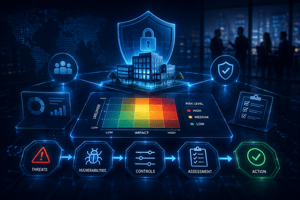
Risk is no longer something that lives in a compliance calendar. It shows up in the decisions businesses make every day, and especially in cybersecurity. However, the teams making those decisions rarely evaluate risk the same way. It’s not because they lack information, but because their roles and reporting lines shape what they consider worth acting on.
Recent research shows that only 26% of organizations have a cross-functional view of risk. Risk assessment training provides teams with a shared method for evaluating risk exposure and making defensible decisions, whether the organization has internal cybersecurity leadership, relies on an MSP, or uses a team-based vCISO model for guidance and oversight. Effective training should be built around practical principles that make risk assessment consistent, repeatable, and useful for decision-making.
What is risk assessment training, and why is it important?
Risk assessment training provides teams with a structured, repeatable method for evaluating and acting on risk. It covers the fundamentals of how risk is identified, evaluated, prioritized, and communicated, then applies those practices across areas such as:
- Business operations
- Technology environments
- Compliance obligations
- Cybersecurity risk
The goal is to make sure findings lead to better risk decisions rather than reports that go nowhere. That matters more than most organizations realize, because a risk assessment only creates value when the organization can act on what it finds. Without a shared evaluation method, teams interpret findings through different lenses, and the inconsistency shows up in delayed remediations, audit gaps, and leadership that cannot get a straight answer on where the organization actually stands
For organizations with meaningful cyber exposure, cybersecurity is often where inconsistent evaluation creates the most visible business consequences. A flagged vulnerability does not come with a pre-attached business decision. It may require remediation, formal risk acceptance, compensating controls, or further review.
The right response depends on the organization's context, and with it, your teams can use the same criteria each time they evaluate cybersecurity risk and make the business case for action more clearly.
Who is risk assessment training for, and how often is it needed?
Risk assessment training is for anyone with a stake in how the organization manages risk. In most organizations, it includes:
- Business and organizational leaders need risk assessment training because risk now has direct consequences for business decisions, contract eligibility, and regulatory standing.
- IT and security teams need a consistent method for translating technical findings into business terms and building recommendations that leadership can evaluate and act on.
- Compliance teams need to understand how assessment findings map to audit requirements and support evidence gathering.
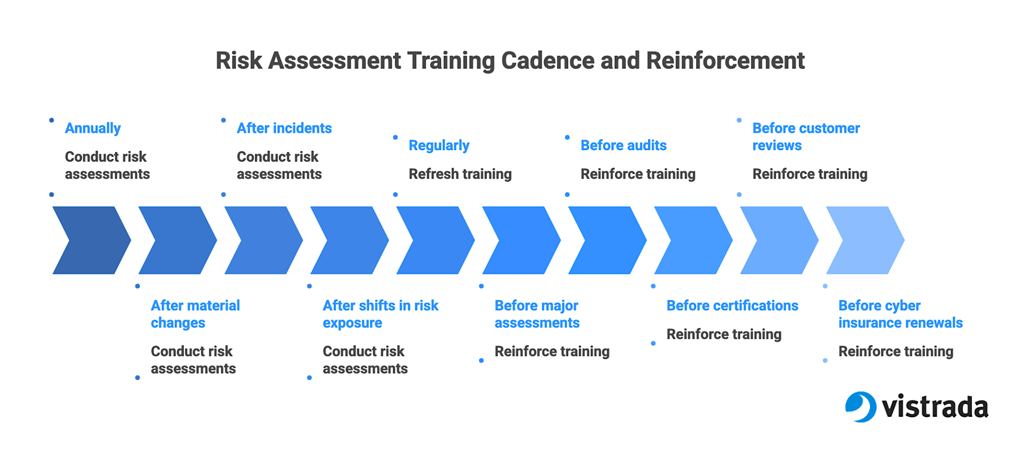
Many frameworks and compliance programs expect organizations to conduct risk assessments on a defined cadence, often annually, with additional reviews after material changes, incidents, or shifts in risk exposure.
Training should be refreshed regularly, and reinforced before major assessments, audits, certifications, customer reviews, or cyber insurance renewals. It is also worth revisiting after a significant incident, a major technology or vendor change, or a new business requirement that affects regulated data, contracts, or operational resilience.
Organizations with lean IT teams or that rely on managed security often need risk assessment training because business accountability for risk remains internal, even when infrastructure management is outsourced. Without internal risk discipline, inconsistent or undocumented decisions can accumulate until they surface as an incident, an audit finding, or a failed customer review.
Vistrada’s team-based vCISO model can help build that discipline by providing cybersecurity leadership, specialist support, a CIO/CTO perspective, and ongoing oversight to make risk assessment a functional part of how the business operates.
Risk Assessment Training: 7 Key Principles
To make risk assessment training useful across teams, design it around these seven principles that help people evaluate risk consistently and act on the findings:
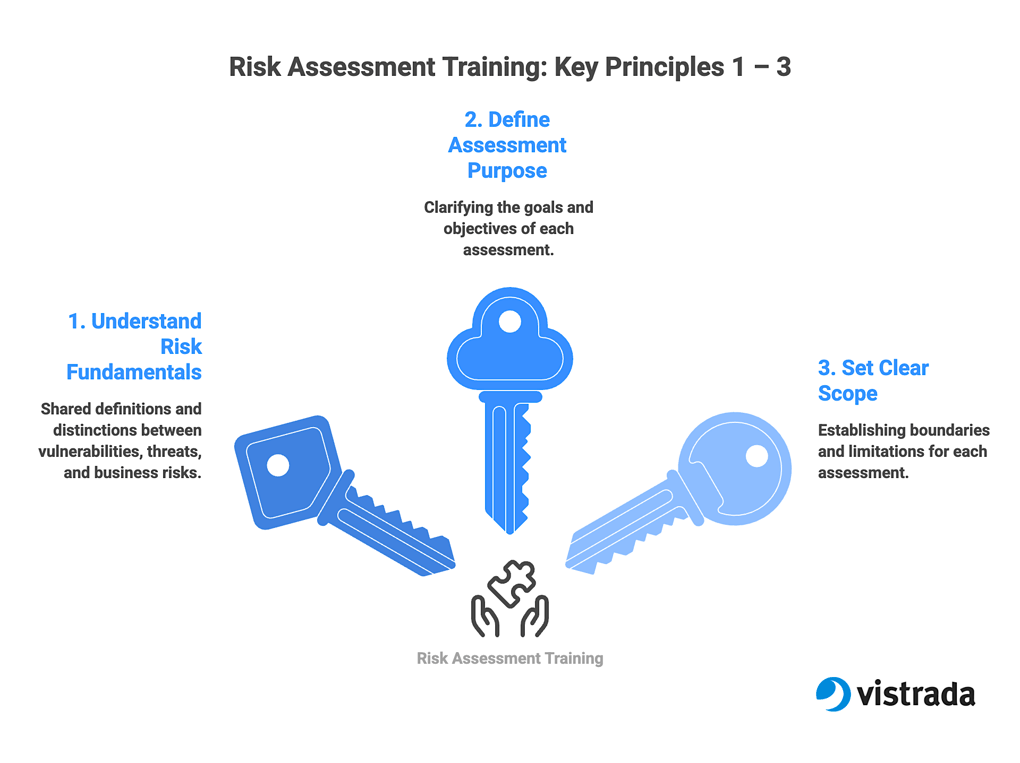
1. Understand the Fundamentals of Risk
Effective risk assessment training starts with a shared definition of risk. Teams need to understand the difference between a vulnerability or control gap, a threat, and a business risk, because those distinctions drive very different responses. Training should make clear that not every technical issue carries the same likelihood or creates the same level of organizational impact.
In cybersecurity, this foundation is what allows teams to explain why a control issue matters to operations, compliance, or resilience, rather than simply flagging it as a technical problem. Without it, the rest of the assessment process is built on inconsistent assumptions.
2. Define the Purpose of the Assessment
Risk assessment training should teach teams to clarify why an assessment is being performed before it begins. An assessment tied to audit readiness may require different evidence and outputs than one triggered by an incident, a new customer requirement, or a business change.
Training that emphasizes purpose keeps assessments focused on the decisions leadership actually needs to make, rather than producing broad reports that cover everything and guide nothing. For cybersecurity assessments in particular, the purpose determines whether the output needs to support compliance documentation, customer assurance, or remediation planning.
3. Set a Clear Scope
Training should show teams how to define what an assessment covers, what it excludes, and how those boundaries affect the findings. An assessment’s scope should be narrow enough to make the work practical and broad enough to support the intended decision. Without these limitations, assessments can produce findings that are technically accurate but disconnected from the decision leadership needs to make.
Training should reinforce that the scope for cybersecurity risk needs to reflect the systems, data, processes, and vendor risk that create real business risk, not just what is easiest to evaluate.
4. Use a Suitable Framework or Methodology
Risk assessment training should explain how frameworks bring structure and credibility to the process, and teach teams to use them as a tool for judgment rather than a substitute for it. The right methodology depends on the organization's maturity, obligations, and risk objectives. For example:
- NIST SP 800-30 can guide the risk assessment process, while the NIST Cybersecurity Framework can help connect assessment activity to broader cybersecurity risk management.
- Standards and assurance requirements such as ISO 27001, SOC 2, CMMC, and PCI DSS may shape scope, evidence requirements, and control expectations depending on the organization’s obligations.
Lean mid-market organizations can leverage a vCISO to provide the security leadership needed to select and apply the right framework, so assessments support practical risk decisions rather than becoming a checklist exercise.
5. Evaluate Risk Consistently
Risk assessment training should teach teams how to evaluate risk using the same criteria every time. Evaluation means analyzing each identified risk against:
- Likelihood – How realistic a threat is given the organization's current environment, not just whether it exists in theory.
- Impact – What the business would actually experience if the risk materialized, which varies significantly depending on the system, the data involved, and the operational consequences of disruption.
- Other Factors – These vary based on the organization's context, and may include asset value, existing controls, regulatory exposure, and the organization's defined risk tolerance.
What’s critical is that everyone involved understands and agrees on what each criterion means before scoring begins. Scoring translates the risk evaluation into a comparable measure that leadership can use to prioritize and allocate resources.
Consistent scoring is harder to achieve in cybersecurity than in other risk domains because technical severity ratings do not map directly to business risk. Training gives teams defined criteria for making that judgment, rather than treating technical severity as the same thing as business risk.
6. Connect Findings to Action
Risk assessment training should show teams how findings become decisions and how those decisions get executed. A useful assessment does not stop at identifying risk. Teams need to understand how to evaluate the appropriate response, whether that means reducing, accepting, transferring, or avoiding the risk.
For cybersecurity, this typically means turning assessment findings into a prioritized remediation roadmap. This step can be enabled by hiring a vCISO with a team-based model that supports that process by connecting assessment results to remediation planning, specialist support, and ongoing governance.
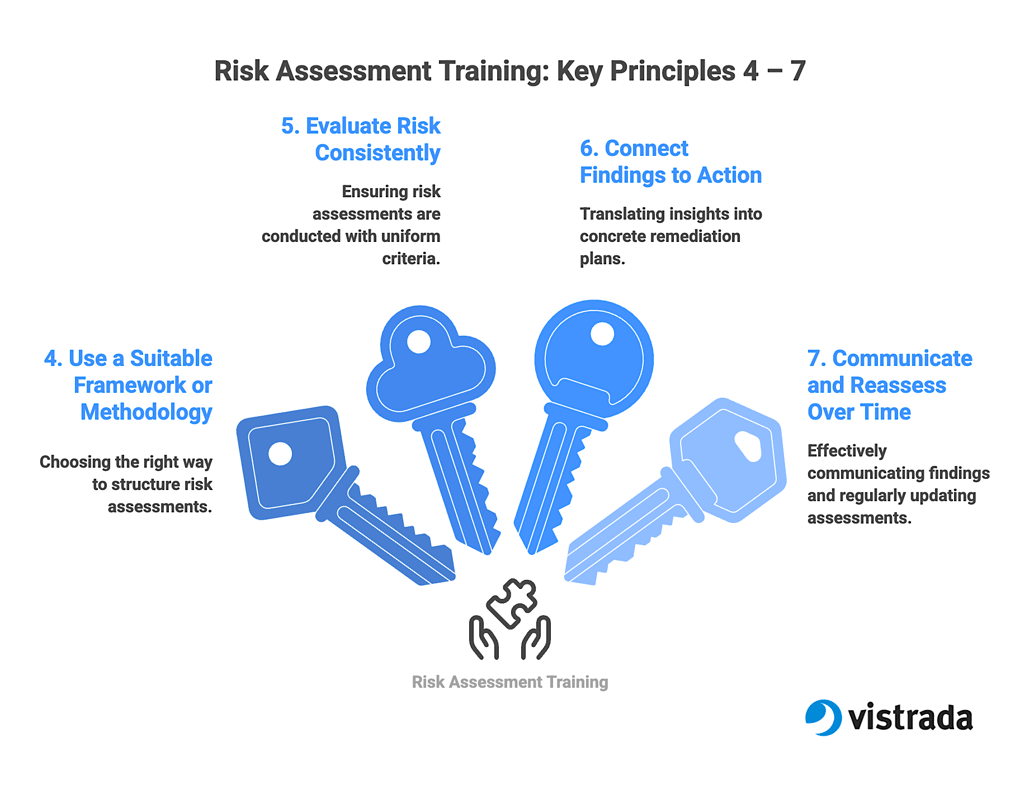
7. Communicate and Reassess Over Time
Training should prepare teams to communicate findings in a format each audience can use. Executives need clarity on business impact and priority. Technical teams need enough detail to act. Compliance teams need documentation that supports evidence gathering and accountability. Beyond communication, training should establish that risk is not a static picture.
Risk assessments should be revisited when meaningful changes affect exposure, controls, obligations, or business impact. Organizations that treat risk assessment as a recurring discipline are better prepared to explain decisions and support evidence when audits, incidents, or customer reviews arrive.
Risk Assessment Training: From Principles to Practice
Risk assessment training gives organizations a consistent way to evaluate risk and make better decisions. Its value comes from helping teams understand risk the same way before they prioritize action. When cybersecurity risk is part of the picture, that shared foundation helps teams translate technical exposure into business-level decisions.
Vistrada helps organizations turn risk assessment training into practical assessment and governance work. Its team-based vCISO model gives lean mid-market organizations access to cybersecurity leadership, and specialist support without in-house hiring. That support helps keep assessment findings connected to ownership, remediation planning, compliance needs, and ongoing oversight.
Contact Vistrada to discuss how team-based vCISO support can help your organization strengthen risk assessment and cybersecurity governance.