

Cyberattacks on operational technology (OT) are escalating, especially across sectors like defense and manufacturing. Yet many organizations still don’t know what’s actually connected to their networks. If you can’t see the devices and systems running your operations, you can’t defend them or show that you’re meeting standards like CMMC or NIST 800-82.
This lack of visibility is a problem with real consequences. Nearly half of the organizations in a recent study reported that OT cyber intrusions disrupted production, and 42% attributed these attacks to lost revenue. To get on top of the situation, your organization needs an OT asset inventory. It’s an ongoing process of identifying, classifying, and maintaining visibility into the devices and systems that run your operational environment.
However, many organizations still lack the structure or resources to maintain an accurate, living inventory over time. An experienced outside consultant who combines strategy and execution to support the necessary technical work is often required. If you’re ready to start building a mature OT asset inventory program from the ground up, here are seven tips to help you do it right.
What are OT assets?
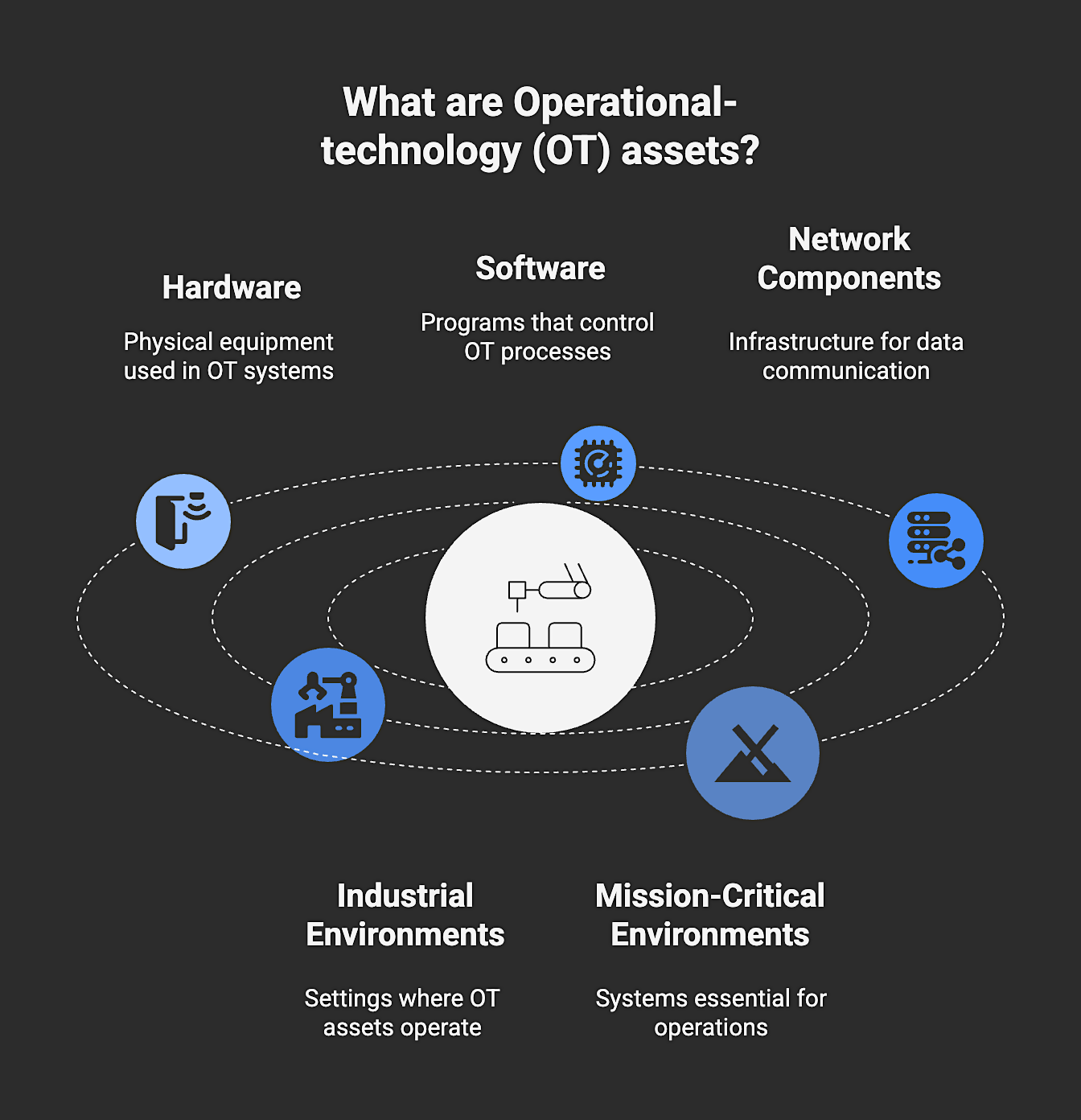
Operational-technology (OT) assets are the hardware, software, and network components that monitor, control, or directly support physical processes in industrial or mission-critical environments. Unlike conventional IT endpoints such as laptops or servers, OT assets typically reside in manufacturing lines, utilities, transportation systems, defense supply chains, or medical device networks.
Common OT assets include:
- Programmable Logic Controllers (PLCs) that sequence actuators on a production line.
- SCADA systems (Supervisory Control and Data Acquisition) and Human-Machine Interfaces (HMIs) that visualize and control industrial processes.
- Remote Terminal Units (RTUs) that extend control into field locations.
- Field sensors (for things like temperature, pressure, flow) and actuators tied to processes
- Industrial switches and network gateways
OT assets anchor the physical side of modern operations. Identifying OT risks is a crucial element in building a security-first organization. If compromised, these assets can disrupt operations or lead to safety violations and noncompliance, especially in environments where availability is critical.
What is OT asset inventory management?
OT asset inventory management is the continuous process of identifying, tracking, and monitoring all OT devices and systems across your operational environment.
The process includes:
- Discovering devices, including legacy and non-standard units
- Collecting device-specific data, such as manufacturer, model, firmware, protocol, and location
- Classifying assets by function and criticality
- Maintaining near real-time awareness of changes, such as new devices, decommissioning, and firmware drift
- Integrating the inventory into risk, segmentation, and compliance workflows
The key to building a reliable OT asset inventory is to use methods and tools that can collect device information without disrupting operations. Many OT systems run on legacy protocols and can’t tolerate active network scans, so traditional IT asset tools often fall short unless they are configured for OT-safe discovery.
It’s best to use modern OT asset inventory platforms that passively observe traffic and pull device details without causing interruptions. CISA’s guidance highlights this visibility layer as an early step toward a defensible OT architecture.
Manufacturing lines, industrial control systems, utilities, defense production, and building automation systems all fall under OT asset-inventory needs. If those systems connect to a network, even indirectly through an MSP, they must be visible in the inventory.
Benefits of OT Asset Inventory Management
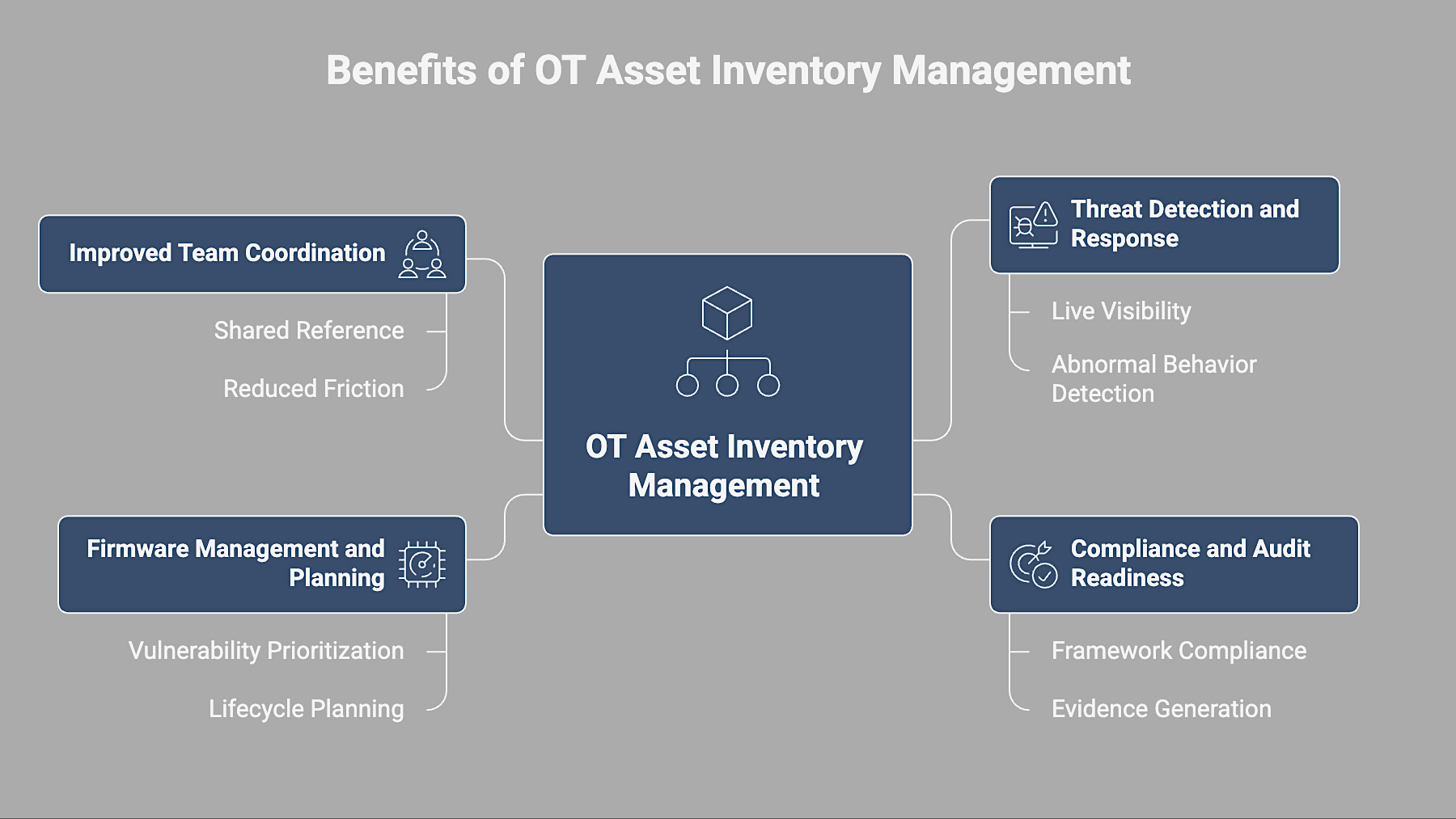
A thorough OT asset inventory offers many benefits, including:
- Foundational visibility for threat detection, segmentation, and response – Inventory gives you a live picture of what exists and how it communicates. This visibility makes it possible to contain lateral movement and flag abnormal behaviors.
- Compliance and audit readiness – Frameworks such as CMMC, NIST CSF, ISO 27001, and DoD SPRS scoring assume you have accurate awareness of your assets. Inventory also supports evidence generation and audit readiness.
- Reduced audit preparation time and stronger evidence trails – A current device list removes weeks of discovery and speeds up responses during compliance questionnaires and vulnerability reviews.
- Firmware management, vulnerability prioritization, and lifecycle planning – With accurate asset metadata, organizations can prioritize patching or compensating controls. You can better plan around maintenance windows to install replacements more effectively.
- Improved coordination between IT, OT, and compliance teams – Asset-inventory programs create a shared reference, which reduces friction between different departments.
7 Tips for Effective OT Asset Inventory Management
Tip #1: Use Passive, OT-aware Discovery Tooling
Many control networks often cannot tolerate active probing because it can interfere with controller operations. Passive collection lets you extract those important asset and communication details from regular traffic without interrupting production.
How to do it:
- Select tooling that understands OT and building automation protocols (such as Modbus, EtherNet/IP, PROFINET, DNP3, OPC UA, and BACnet).
- Set the collector to passive, read only, and disable any active probes or write operations.
- Connect the sensor or collector to a network TAP or SPAN port so it can watch traffic without sending its own requests.
- Run a controlled pilot on a small segment with controls engineering to confirm there is no latency or load impact.
- Feed the extracted metadata into your OT asset inventory.
After collecting the baseline data, review it with your engineering teams to verify device status and confirm network addresses. Remove entries for equipment that has been replaced, disconnected, or left idle, and flag any unknown devices for investigation.
Tip #2: Categorize and Prioritize Assets by Operational Impact
Some devices can halt a line or affect safety if they fail, while others mainly support monitoring or record-keeping. Clear tiering helps direct monitoring and patching efforts toward the systems that are key to production continuity or regulatory exposure.
How to do it:
- Assign each asset an impact level based on what happens if it deviates from expected behavior or goes offline.
- Highlight equipment that directly manipulates physical processes, such as controlling movement, pressure, or chemical dosing.
- Add attributes that impact risk decisions, such as safety relevance, mandated oversight, remote access capability, and vendor support status.
- Use the resulting tiers to set review intervals and prioritize patching.
- Record the assigned impact level in your OT asset inventory to inform monitoring and patching priorities.
Tip #3: Establish Ongoing, Real-time Visibility into Asset Changes
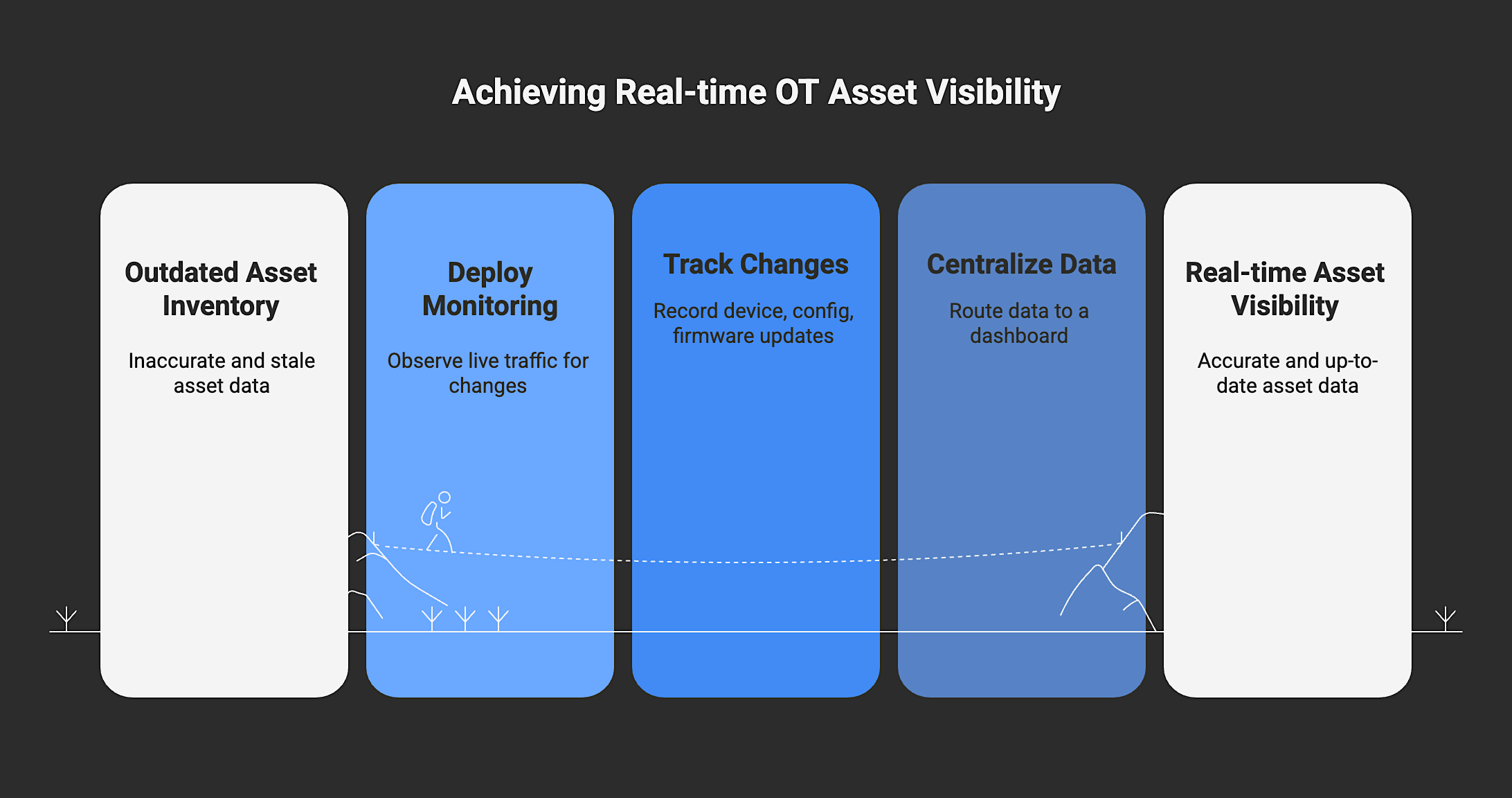
OT environments constantly change as older devices are swapped out and new hardware appears on the network. Without continuous updates, your OT asset inventory becomes outdated quickly. Continuous monitoring can capture changes, such as altered configurations or mismatched firmware versions, in near real-time.
How to do it:
- Deploy monitoring that observes live traffic to detect new or altered devices and configuration changes.
- Track any device changes (configurations, addresses, firmware) and send them to a centralized system of record.
- Route this data into a centralized dashboard so teams can use it during maintenance or segmentation work.
- Review flagged changes regularly to confirm that they match planned work and to identify potential security issues.
Tip #4: Map Device Relationships and Data Flows
Visibility alone doesn’t show how risk moves through the environment. You need to understand those connections to see how a failure or intrusion might spread. Network flow analytics and communication logs can reveal these interaction paths:
- Which controllers issue commands to field sensors?
- How do HMIs interact with historians or engineering stations?
- Where does the remote access bridge into the control network?
How to do it:
- Use traffic analysis to trace which devices communicate, in which direction, and over which ports and protocols.
- Identify where external entry points touch the control environment.
- Label communication flows by segment so the plant-control layer, field layer, and enterprise connections are clearly separated.
- Look for situations where boundaries have softened, such as field devices communicating upward.
- Build a visual map from this data. Use it to shape segmentation rules and conduit design (aligned with ISA/IEC 62443 principles and the Purdue model for ICS segmentation). Link the map to your OT asset inventory so device relationships remain traceable.
Tip #5: Build Your Asset Inventory to Directly Support Compliance Controls
Every OT asset record should support compliance. When a control asks who manages an industrial workstation or what firmware runs on a PLC, the answers should already exist in the inventory. It provides auditors and security teams with a single, trusted source of truth, eliminating the need for disconnected lists that must be rebuilt manually at review time.
How to do it:
- Record who owns each device and its location within the environment to establish accountability.
- Capture the device’s purpose and any classification notes that relate to applicable compliance controls.
- Link this metadata to your governance portal so new information is automatically reflected in the records auditors will review.
- Include control references that support compliance reviews. Capture the control identifier, the location of the evidence artifact, and the last validation date.
Vistrada helps organizations formalize this structure by linking technical inventory data to governance and evidence requirements, making compliance tracking an integral part of everyday operations.
Tip #6: Document Vendor, Firmware, and Patch Information
Accurate technical details link the OT asset inventory to vulnerability and lifecycle management. Any deviation from supported versions or expected configurations can indicate a potential vulnerability. When the data is current, you can address the exposure instead of discovering it during an audit or incident.
How to do it:
- Record the vendor, model, firmware version, patch state, and any configuration notes.
- Flag equipment running outdated or unsupported versions so it can be reviewed for risk.
- Note cases where patching isn’t possible and document what compensating control is in place.
- Track end-of-life announcements to schedule maintenance windows without scrambling.
Tip #7: Engage a vCISO to Turn Inventory Work into Operational Strategy
The value of an OT asset inventory is only realized when the information is kept current and actively used. Hiring a vCISO (virtual Chief Information Security Officer) can provide the discipline needed to interpret that data and guide decisions that are aligned with operational goals.
How to do it:
- Bring in a vCISO to establish clear ownership for OT asset inventory. They can outline how updates get approved and how oversight is handled.
- Establish an update rhythm with the vCISO that reflects how often the environment changes, and include continuous penetration testing to validate controls between audits.
- Have them coordinate the connection between the inventory and your existing monitoring, ticketing, and change-management tooling.
- Ask them to map the inventory to your relevant compliance frameworks.
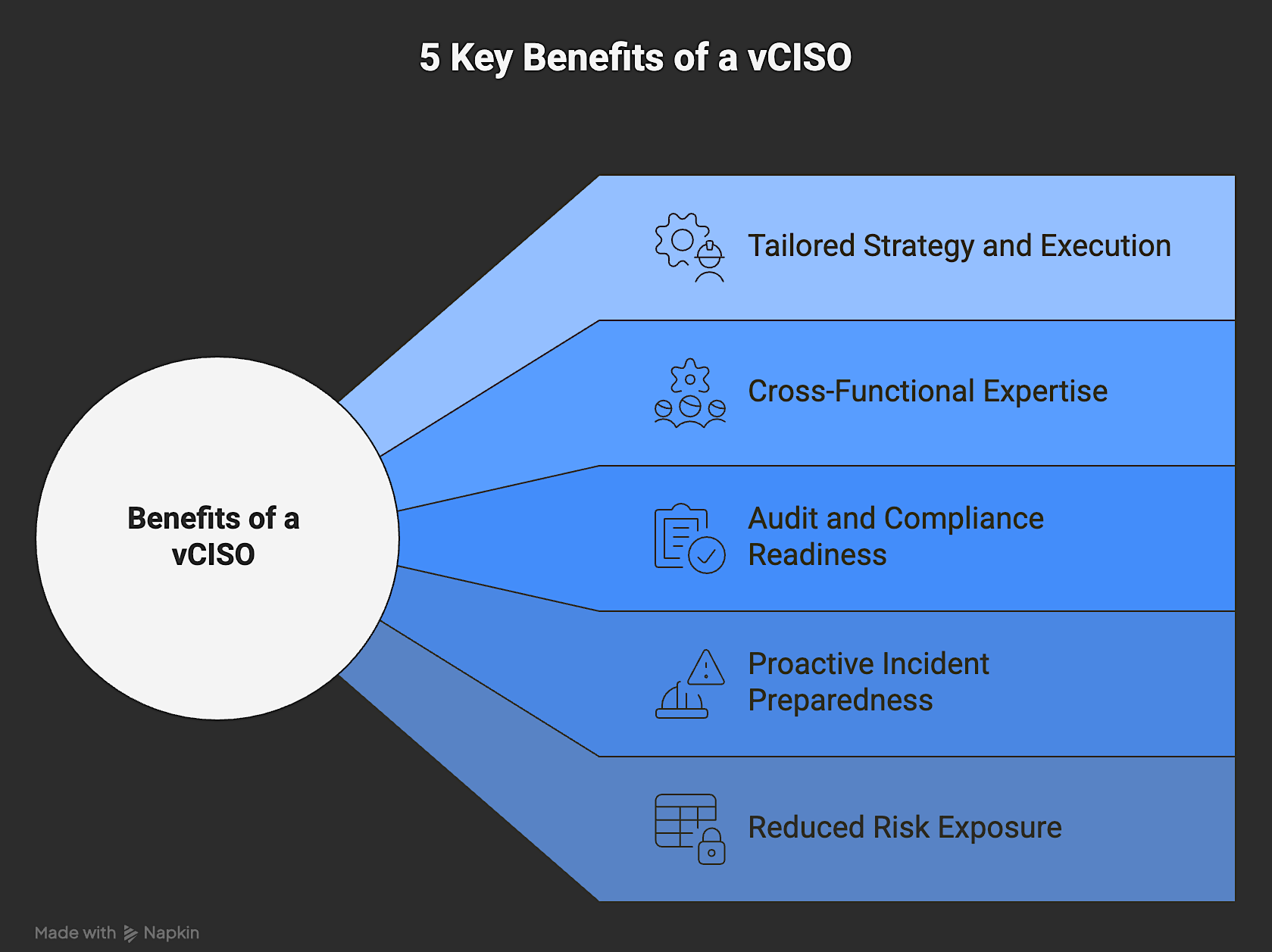
Vistrada’s team-based vCISO model combines strategic oversight with hands-on implementation support. That includes establishing asset ownership structures, defining update and validation cycles, integrating inventory data into existing monitoring and ticketing systems, and aligning reporting with frameworks such as CMMC and NIST SP 800-82.
Get Effective OT Security with Vistrada
For organizations with industrial or infrastructure systems, a comprehensive OT inventory is the starting point for effective security against threats. An asset inventory gives teams a clear view of which OT assets and network connections exist and how they are changing, so they can see risk forming before incidents occur.
However, many organizations lack the capacity and cross-disciplinary expertise to keep an OT asset inventory current and audit-ready. Vistrada helps organizations implement OT asset inventory programs that satisfy security and compliance objectives by combining a team-based vCISO model with hands-on technical execution and framework alignment. This approach turns the inventory into a living program that informs decisions and reduces audit friction while supporting safe operations.
Contact Vistrada to assess your current OT asset inventory and discover how improved visibility can benefit you.