


Many organizations are struggling to manage the growing complexity of their supply chains. What used to be a manageable set of vendor relationships has become a sprawling network of third parties, each introducing new operational and regulatory risks. In regulated industries, even a single supplier misstep can lead to noncompliance, reputational damage, or lost business. Internal teams are tasked with overseeing dozens or even hundreds of vendors, often without the resources or systems needed to manage risk effectively.
As oversight challenges grow, many organizations are rethinking their approach to supply chain risk management. Nearly two-thirds still report higher-than-expected losses, despite efforts to improve visibility and control. These outcomes point to a deeper issue: most organizations’ internal supply chain risk management efforts weren’t designed to handle today’s scale or complexity.
Engaging a qualified supply chain risk management consultant enables organizations to bridge this gap. Given the stakes, selecting the right vendor is not a decision to take lightly. Let’s explore how to evaluate a vendor for supply chain risk management services that can support your business in this high-stakes environment.
What is Supply Chain Risk Management (SCRM)?
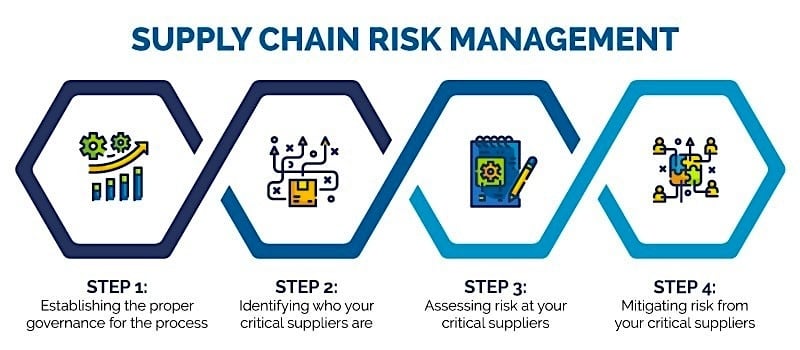
Supply chain risk management (SCRM) is the process of identifying, assessing, and mitigating risks that arise from an organization’s relationships with external suppliers and vendors. Some of these risks include cybersecurity threats, regulatory noncompliance, operational disruption, and financial instability. In regulated industries, and especially those handling sensitive data or defense contracts, even a single vendor lapse can result in legal or contractual consequences.
Effective SCRM goes beyond vendor due diligence by requiring a structured approach to evaluating third parties: not only their ability to deliver, but their ability to do so securely and in accordance with regulatory and contractual requirements.
The SCRM process also involves:
- Anticipating supplier failures.
- Monitoring risk signals.
- Improving transparency.
- Putting controls in place that can scale with supply chain complexity.
Regulatory and contractual frameworks now require formal third-party risk management processes. Programs aligned to CMMC, NIST SP 800-171, DFARS, and ISO 27001 must include documented procedures for evaluating and monitoring supplier risk.
The best supply chain risk management services help organizations put these controls into practice through integrated oversight, hands-on execution, and alignment across cybersecurity and compliance functions.
Key Trends Shaping Supply Chain Risk Management
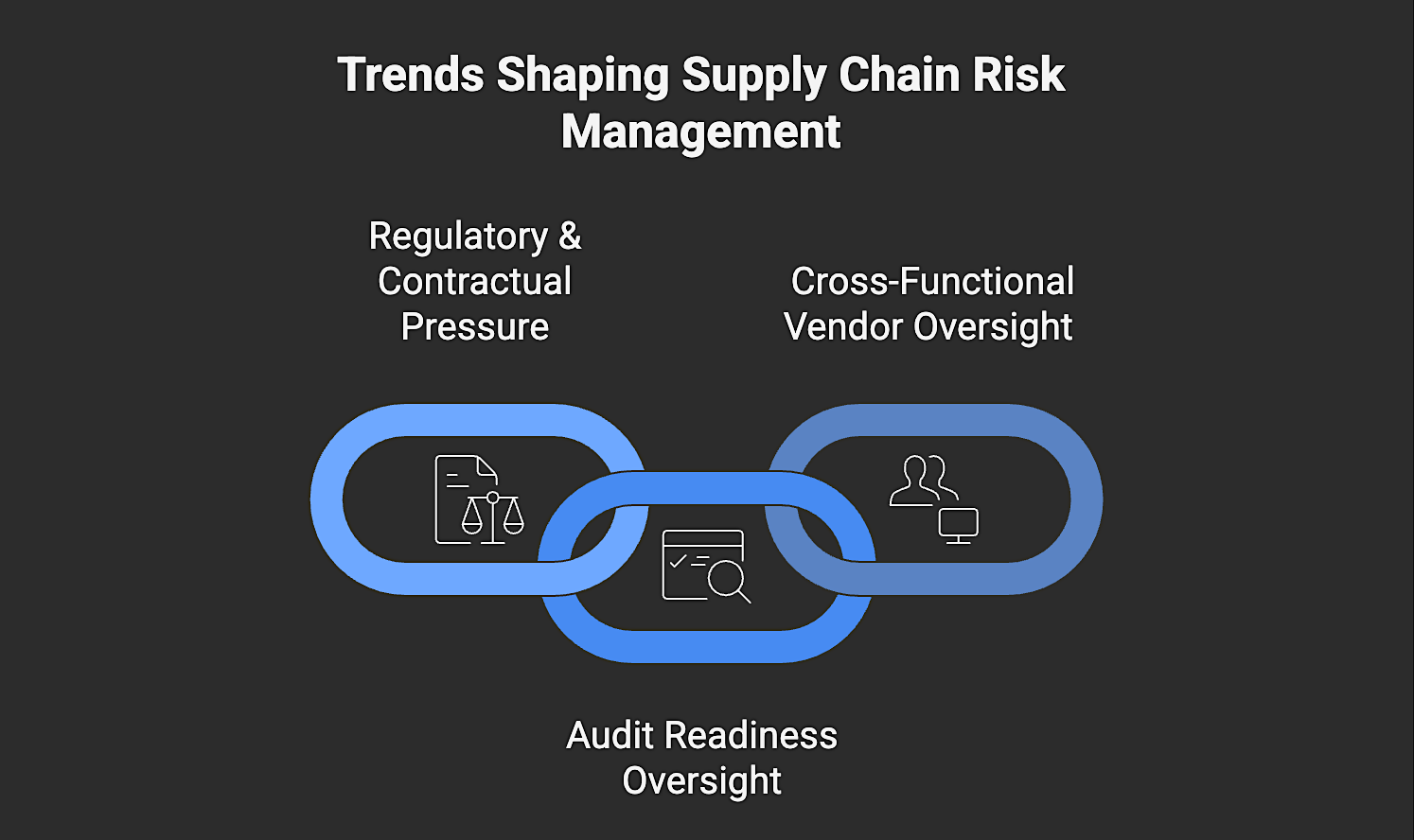
Rising Regulatory and Contractual Pressure
Today, supply chain risk management is being reshaped by regulatory enforcement, contractual scrutiny, and the operational need for continuous oversight. Organizations that rely on third-party vendors, especially those in regulated sectors, are facing increasing pressure to demonstrate formal control over supplier-related risks. Several factors, including updated federal requirements, evolving security standards, and client expectations for documented, auditable programs, are driving these demands.
Audit Readiness Requires Continuous Oversight
Federal frameworks such as CMMC 2.0 and NIST SP 800-171 now require organizations to account for how sensitive information is accessed, handled, and protected across their supplier base. In the defense sector, DFARS clauses are being enforced with more consistency, compelling contractors to validate compliance across all tiers of their supply chain. Meeting these requirements demands continuous documentation, proactive oversight, and the ability to produce evidence during audits or investigations.
Vendor Oversight Is Now Cross-Functional
Operationally, organizations are implementing more structured approaches to vendor oversight. Manual review processes and one-time risk assessments are being replaced by systems that provide real-time visibility and insight. Security, procurement, and compliance teams now rely on shared data environments to monitor vendor performance and escalate risk when necessary.
These changes have made it more critical for organizations to start by clearly defining what they need from a supply chain risk management vendor.
How to Choose a Vendor for Supply Chain Risk Management Services
Choosing the right vendor depends on how well they can meet your specific requirements. Here’s what to evaluate and assess to determine if they can support your SCRM program:
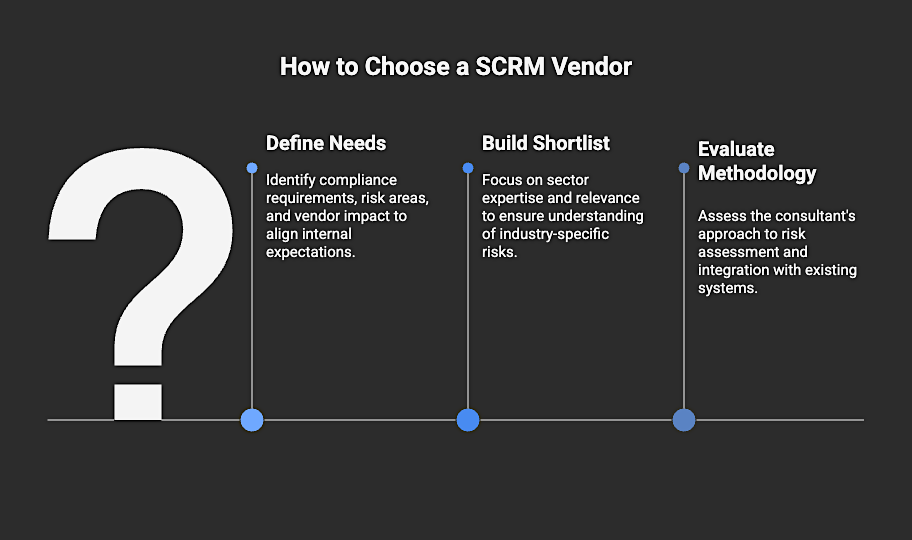
Step 1: Define Your Internal Needs and Risk Priorities
Start by identifying what your organization expects from a supply chain risk management program. These must-haves include compliance requirements, areas of exposure, and how vendor risk affects operational or contractual outcomes.
In most cases, the need for outside support is triggered by one or more of the following:
- New or updated obligations under CMMC, DFARS, NIST SP 800-171, or ISO 27001.
- Upcoming audits or contract bids involving sensitive data.
- Gaps in oversight of suppliers with access to critical systems or information.
These priorities should be clearly defined and agreed upon across stakeholders before evaluating any vendors. Procurement, compliance, and IT teams often have different expectations, and alignment upfront helps prevent gaps later in the process.
Step 2: Build a Shortlist Based on Sector Expertise and Relevance
Supply chain risk is context-specific. A consultant with experience in your industry will be better equipped to interpret how vendor risk intersects with your compliance obligations and contract requirements.
As you build a candidate shortlist, look for firms that demonstrate a clear understanding of:
- The regulations and frameworks that apply to your industry.
- The kinds of third-party relationships that drive operational or compliance risk.
- How your organization is expected to validate and document assurance.
Ask for examples of work with organizations in your industry or with similar regulatory obligations. Use that information to rule out vendors who rely on one-size-fits-all approaches and don’t understand how risk actually shows up in your business. Your shortlist should include only firms with proven success in settings that reflect your business realities.
Step 3: Evaluate Methodology and Risk Management Approach
Ask the vendor to explain how they assess supplier risk and what actions they take based on those findings. Their approach should account for both the nature of your vendor relationships and the applicable regulatory standards.
A credible supply chain risk management approach should include:
- A consistent method for evaluating supplier performance and risk exposure.
- Integration of applicable frameworks, such as CMMC, NIST SP 800-171, or DFARS.
- A transparent process for keeping evaluations current as vendor conditions evolve.
Evaluate how well the vendor’s approach aligns with the existing systems and teams responsible for oversight. It should support your internal workflows and produce results your team can act on.
A competent vendor will be able to explain their process in plain terms and demonstrate how their services lead to measurable improvements across your vendor ecosystem.
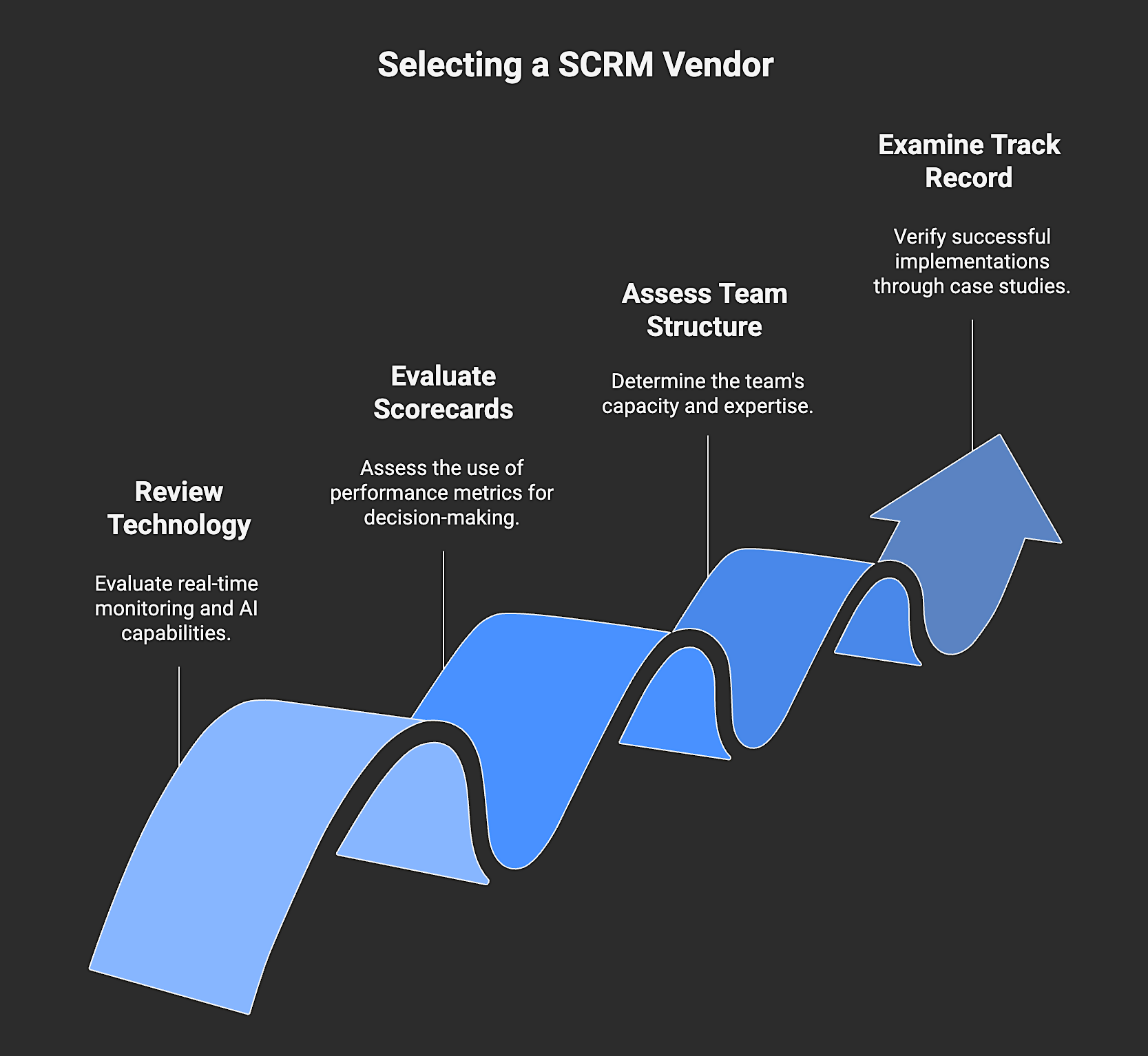
Step 4: Review Technology and Real-Time Monitoring Capabilities
When choosing a supply chain risk management vendor, you’re evaluating how their expertise is applied in real-world operations. Many vendors bring technology as part of their delivery model. That includes platforms, tools, or integrations that help your team track supplier issues, assess risk, and respond quickly.
One of the most essential capabilities is real-time monitoring. It provides your team with ongoing visibility into changes in vendor status, ensuring that risk doesn’t accumulate between scheduled reviews.
Ask if the vendor uses:
- AI to identify risk signals in supplier behavior or documentation.
- Analytics to assess trends, control failures, or compliance gaps.
- Dashboards to provide visibility into the current vendor status.
- Systems like supply chain security tools that support your internal reporting requirements and integrate with the solutions your company already uses.
The best vendors also provide digital control tower capabilities to reduce manual tracking and provide a centralized view of your supplier ecosystem.
Step 5: Evaluate Scorecards and Performance Metrics
Scorecards and performance metrics are essential tools for managing supplier risk. Reviewing how an SCRM vendor uses these tools helps you determine whether they can provide valuable, actionable data to support decision-making.
Evaluate whether the vendor:
- Scores supplier reliability, data security, financial condition, compliance history, and reputation.
- Can tailor scoring models to your program objectives and risk tolerance.
- Links scorecard outputs to decision-making and remediation.
- Explains how data inputs are validated and maintained across supplier evaluations.
- Reports on vendor performance in ways that align with your service expectations and risk priorities.
Vendors should help your team use scorecards and performance metrics to support data-driven decision-making, such as adjusting vendor terms or responding to elevated risk.
Step 6: Assess Team Structure and Delivery Capacity
A supply chain risk management consultant is only as effective as the team behind them. When evaluating a vendor, assess both how their team is structured and whether they have the capacity to deliver the ongoing execution your program requires.
Delivery capacity should be assessed based on how well the vendor can run the operational components of your supply chain risk program. These include executing control requirements, monitoring vendor risk, supporting remediation, and coordinating reporting with compliance teams.
To assess team structure and delivery capacity, seek a vendor that can:
- Assign a multidisciplinary team, including virtual CISO leadership, analysts, and technical specialists.
- Provide dedicated personnel rather than relying on a single fractional resource.
- Support the hands-on execution of supply chain risk management activities.
- Stay actively involved in delivering supply chain risk management services during audits or incident response.
- Work within your existing systems and teams to support compliance tracking and risk reporting.
Step 7: Examine Implementation Track Record and Case Studies
A vendor’s credibility should be grounded in a track record of successful implementation. Ask for documented examples and case studies of programs they’ve delivered in organizations with comparable vendor risk and compliance demands.
The vendor should provide:
- References from organizations with similar regulatory requirements or vendor risk challenges
- Documented outcomes, such as audit readiness, supplier performance gains, or incident response improvements
- Experience building cross-functional SCRM programs that scale with business needs
- Examples of how they’ve supported supplier remediation efforts
Independent references and proven measurable outcomes offer stronger validation and a more reliable basis for selecting the right supply chain risk management consultant.
Step 8: Evaluate Cultural Fit and Long-Term Collaboration Potential
Managing supply chain risk requires an ongoing partnership with vendors that evolves with your organization’s needs. A vendor’s ability to align with your internal culture and collaborate effectively with your teams over time is just as important as their technical qualifications.
Look to hire a SCRM vendor who:
- Demonstrates transparency, responsiveness, and flexibility in early conversations.
- Can adapt to changes in organizational priorities and regulatory requirements.
- Approaches supply chain risk management as a collaborative, ongoing effort.
- Builds long-term trust by adapting their approach based on feedback throughout the engagement.
Step 9: Define Governance, Reporting, and Continuous Improvement
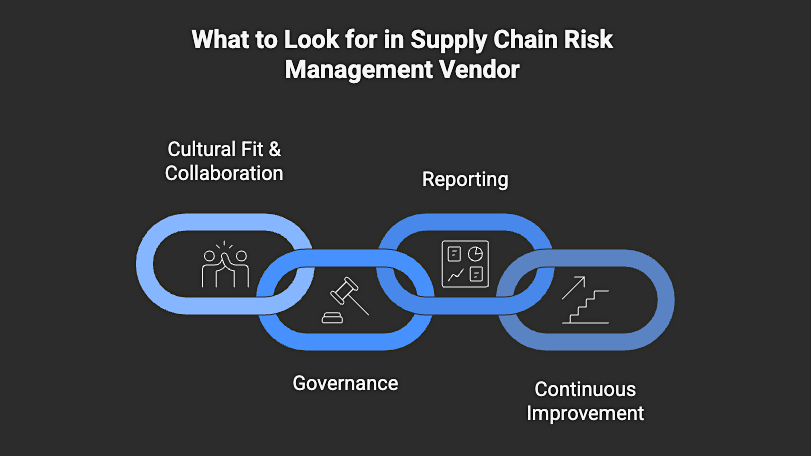
An experienced vendor will define how governance, reporting, and continuous improvement operate within your broader supply chain oversight efforts. They should clearly define how each function contributes to managing vendor risk:
- Governance assigns ownership for key decisions and defines accountability between your internal teams and the consultant.
- Reporting delivers structured visibility into supplier status and performance over time.
- Continuous improvement utilizes these insights to adjust controls and enhance oversight.
To support this framework, a SCRM vendor should be able to:
- Establish a reporting cadence that aligns with your internal risk review cycles.
- Support audits, policy updates, and formal reviews of supplier performance.
- Embed continuous improvement practices into their engagement approach.
- Integrate reporting tools into your existing risk and compliance systems.
A consultant’s ability to define and implement these functions is essential to ensuring sustainable supply chain risk management outcomes.
Strengthen Your Supply Chain Risk Management with Vistrada
Selecting the right supply chain risk management consultant is crucial for mitigating third-party risk and ensuring compliance. This decision impacts how your organization evaluates and selects vendors, enforces requirements, and maintains oversight in response to evolving operational and regulatory conditions. To get this right, you need a partner who brings both strategic insight and hands-on execution to every stage of the engagement.
Vistrada fills that role with high-touch, vCISO-led SCRM consulting tailored for regulated industries and complex supply chains. It deploys an experienced professional team of specialists and proprietary systems to implement and manage supplier controls, support audits, and maintain governance across compliance workflows and supplier performance tracking.
Connect with Vistrada to get team-based vCISO services that strengthen your supply chain risk management program.